Apr 2, 2026
Why skin can feel oily and dry at the same time
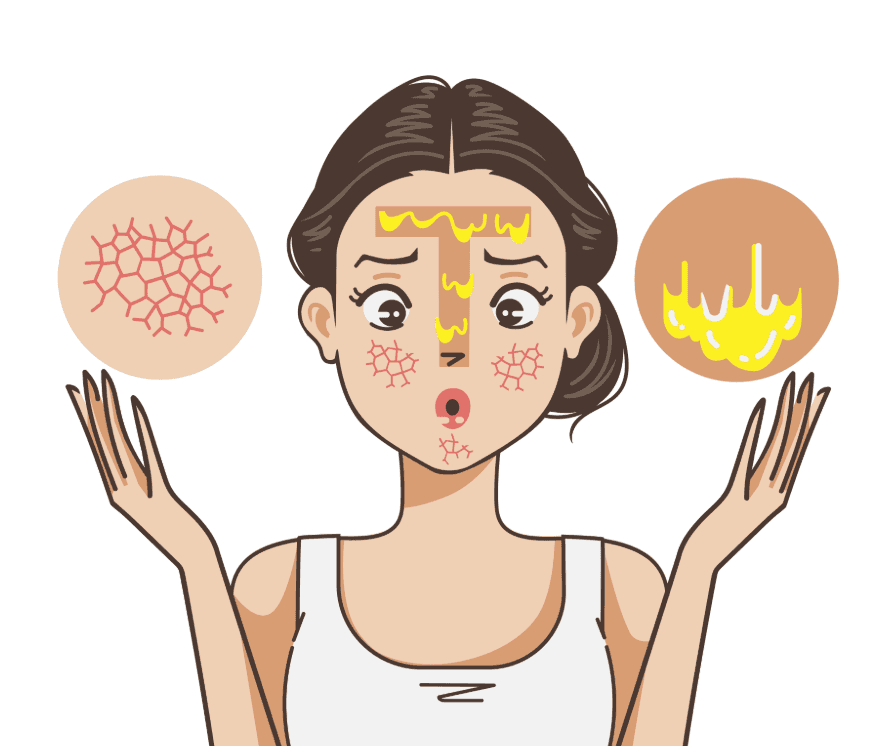
Does your T-zone get shiny by midday while your cheeks still feel tight, or even a little flaky? If these two things are happening on the same face at the same time, it's easy to feel confused and not know what to do. But here's the thing: this is way more common than you'd think. Your skin isn't broken. It's just dealing with two different things at once. In fact, you might have just combination skin, one of the most common types.
Oiliness and dryness are actually two separate problems
A lot of people assume that if their skin is oily, it must be well-hydrated. But oil and hydration aren't the same thing. They're completely independent, and they can both show up on the same face. Oil refers to sebum (skin oil), while hydration refers to water content in the skin.
Sebum is produced by sebaceous glands, which are more active in the T-zone, so that area tends to feel oilier. But your cheeks? They have fewer sebaceous glands and less natural oil, which makes them more prone to losing water. Hence that tight, dry feeling.
When this happens, it often comes down to one of two things:
Combination skin — your T-zone is naturally oilier and your cheeks are naturally drier. That's just how your skin is built.
Dehydrated oily skin — your skin produces oil, but it's also low on water. This is a condition, not a skin type, and it can get a lot worse if you're using the wrong products.
These two can look really similar, but they don't work the same way, so figuring out which one you're dealing with really matters.
Trying to control oil can make things worse
A lot of people reach for foaming cleansers, alcohol-based toners, and every mattifying product they can find, but it can backfire. When you strip the skin too much, your skin barrier weakens, leading to even more water loss.
When that happens, you can end up with dry, tight areas alongside an oily T-zone. Not necessarily because the skin is immediately producing more oil to compensate, but because the balance between oil and water on the skin has been disrupted.
The cycle goes something like: over-cleansing → damaged skin barrier → increased water loss → oil disbalance → you try to control the oil → repeat.
So the real goal isn't to dry everything out. It's to treat each area to what it actually needs.
Oily areas: Niacinamide (Vitamin B3) is a great option — it helps regulate sebum production without drying the skin out
Dry areas: Look for ceramides to repair the barrier and hyaluronic acid to attract and retain water
And yes, moisturiser is non-negotiable, even for oily skin. Skipping it can contribute to dehydration, especially if the barrier is already compromised. A lightweight gel or lotion - and you're good.
Skin is a complex system, and it rarely fits neatly into one box. The best thing you can do is take the time to actually understand what your skin is doing, and why.
Author: Wenli Hu
Learn more
Discover more from the latest posts.