
The Ingredient Compatibility Matrix: What Actually Works Together (and What Doesn't)

Onkar Raorane
Why Mixing the Wrong Skincare Ingredients Could Be Sabotaging Your Results
You've invested in quality serums, researched the best active ingredients, and built what seems like the perfect skincare routine. But here's what most people don't realize: the order and combination of your products matters more than the products themselves.
When you layer incompatible ingredients, you're not just wasting money - you're potentially triggering irritation, reducing efficacy, or completely neutralizing the very actives you bought for their benefits. The difference between glowing skin and breakouts often comes down to understanding ingredient compatibility.
This comprehensive guide will teach you exactly which skincare ingredients work synergistically, which combinations should be avoided, and how to structure your routine for maximum effectiveness without irritation.
The Science Behind Ingredient Interactions
Most skincare advice focuses on choosing the "right" ingredients—vitamin C for brightening, retinol to fight signs of aging, niacinamide for pores. But the skincare industry's dirty secret is that individual ingredients mean nothing if they can't work together.
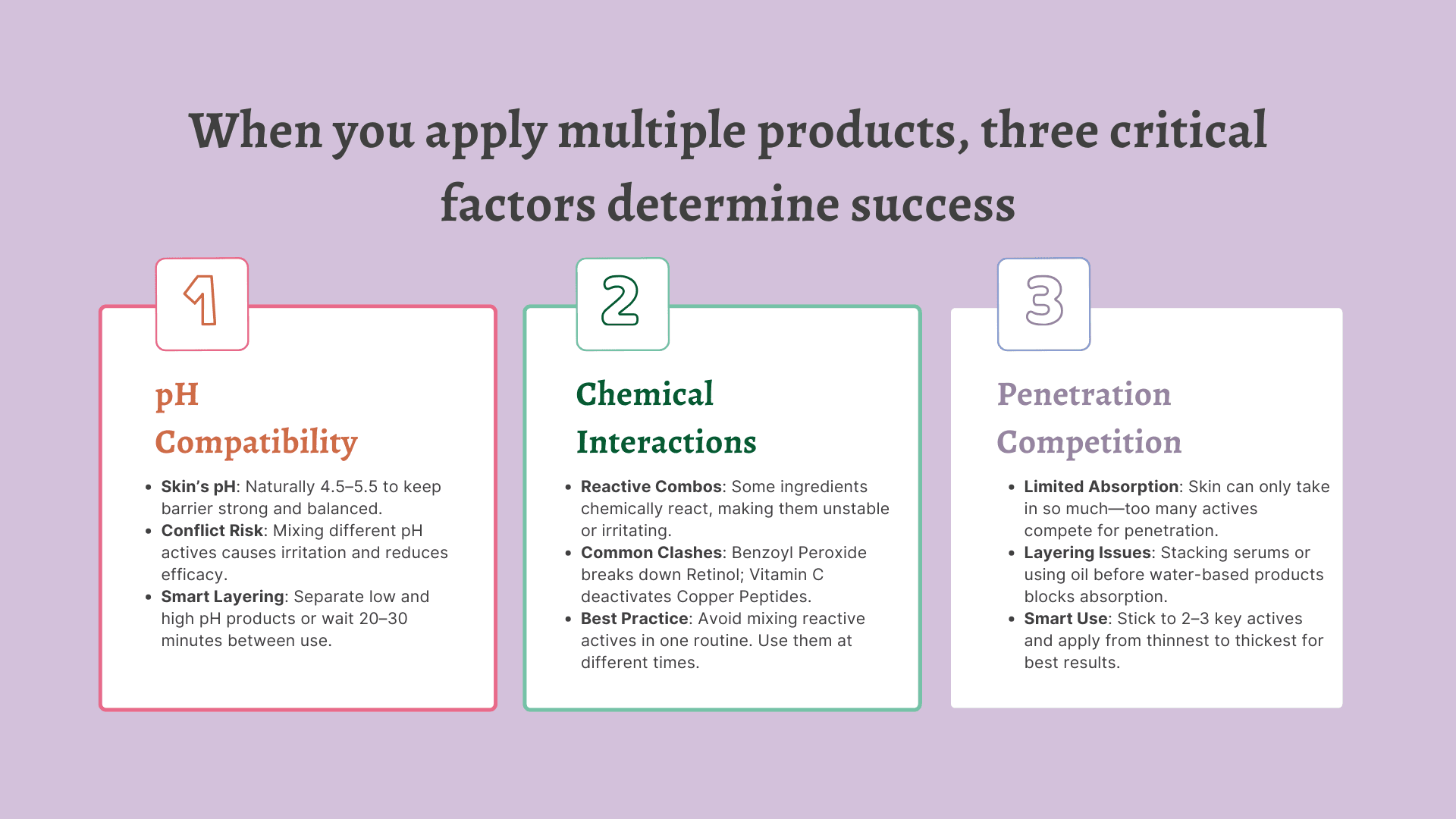
When you apply multiple products, three critical factors determine success
pH Compatibility: The Hidden Factor in Skincare Layering
What pH Actually Means for Your Skin
Your skin's natural pH sits around 4.5-5.5 (slightly acidic). This acidic mantle protects against bacteria, maintains moisture, and keeps your skin barrier healthy. Each active ingredient has an optimal pH range where it remains stable and effective.
When you layer products with drastically different pH levels, several problems occur:
Active ingredients become unstable and degrade
Skin's protective barrier gets disrupted
Irritation and sensitivity increase
You don't get the results you paid for
Low pH Actives (2.0-4.0)
Vitamin C (L-Ascorbic Acid) works best at pH 2.0-3.5. Layering a vitamin C serum (pH 2.5) immediately followed by niacinamide (pH 6.0) creates a pH shock that can cause temporary flushing in sensitive individuals.
AHAs (Glycolic Acid, Lactic Acid) function at pH 3.0-4.0. Glycolic acid layered directly under peptide serums (pH 5.5-7.0) can destabilize the peptides, reducing their effectiveness at signaling collagen production.
BHAs (Salicylic Acid) work at pH 3.0-4.0. Applied before retinol (pH 5.5-6.0) without adequate wait time, salicylic acid disrupts skin's natural pH balance, increasing irritation risk.
Neutral to High pH Actives (5.5-7.0)
Niacinamide functions optimally at pH 5.0-7.0 Retinol/Retinoids work at pH 5.5-6.0
Peptides require pH 5.5-7.0
Solution: Either use these ingredients at different times of day, or wait 20-30 minutes between applications to allow your skin's pH to rebalance naturally.
Chemical Interactions
Some ingredients chemically react when combined, creating new compounds that may be:
Completely ineffective
Irritating or inflammatory
Less stable than the original ingredients
Potentially harmful to skin
Examples:
Benzoyl Peroxide + Retinol: Benzoyl peroxide is a strong oxidizer that can break down retinol molecules, rendering your retinol serum completely ineffective. The oxidation reaction destroys retinol's ability to increase cell turnover
Vitamin C (Ascorbic Acid) + Copper Peptides: The acidic pH of vitamin C can cause copper peptides to precipitate and lose their bioavailability. The copper ions may also oxidize vitamin C, neutralizing both ingredients.
Niacinamide + Acidic Ingredients at High Heat: Under extreme conditions (like in a hot car), acidic environments can convert niacinamide to niacin, which causes u
Penetration Competition
Your skin can only absorb so much at once. When you layer multiple active ingredients, they compete for penetration, leading to:
Reduced efficacy of all products
Surface buildup and pilling
Increased risk of irritation without increased benefits
Examples:
Multiple Serums Stacked: Applying a vitamin C serum, followed immediately by a niacinamide serum, hyaluronic acid serum, and peptide serum creates a "traffic jam" at the skin barrier. The first serum (vitamin C) may penetrate, but subsequent layers often sit on the surface, causing pilling and waste.
Oil-Based Products Before Water-Based: Applying a facial oil before a water-based retinol serum blocks the retinol from penetrating effectively. Oils create a barrier that water-based actives cannot easily cross, meaning your expensive retinol mostly sits on top of the oil.
Too Many Actives in One Routine: Using glycolic acid toner + vitamin C serum + retinol + azelaic acid in a single routine means each ingredient competes for limited receptor sites and penetration pathways. Result: mild effects from everything instead of strong results from 2-3 well-chosen actives.
Thick Moisturizer Before Treatment: Applying a heavy, occlusive moisturizer before your treatment serums prevents active ingredients from reaching deeper skin layers. The moisturizer acts as a physical barrier, trapping actives on the surface where they're less effective.
Understanding these factors is the difference between a routine that works and one that wastes your time and money.
Common Ingredient Conflicts: What the Research Actually Shows
Vitamin C + Niacinamide: The Misunderstood Pairing
The Myth: These ingredients neutralize each other and should never be combined.
The Truth: This belief comes from a 1960s study showing that niacinamide converts to niacin (a skin irritant) in the presence of pure L-ascorbic acid at high temperatures. Modern formulations have solved this problem.
Can You Use Them Together? ✅ YES, with caveats:
Modern formulations are pH-buffered and stable
They work through different mechanisms (vitamin C is antioxidant, niacinamide is anti-inflammatory)
Combined use may actually provide superior brightening results
Look for products specifically formulated to include both
⚠️ Best Practice: If you experience flushing or irritation (affecting ~5% of users), separate them by 30 minutes or use at different times of day. Vitamin C in the morning (under sunscreen) and niacinamide at night works beautifully.
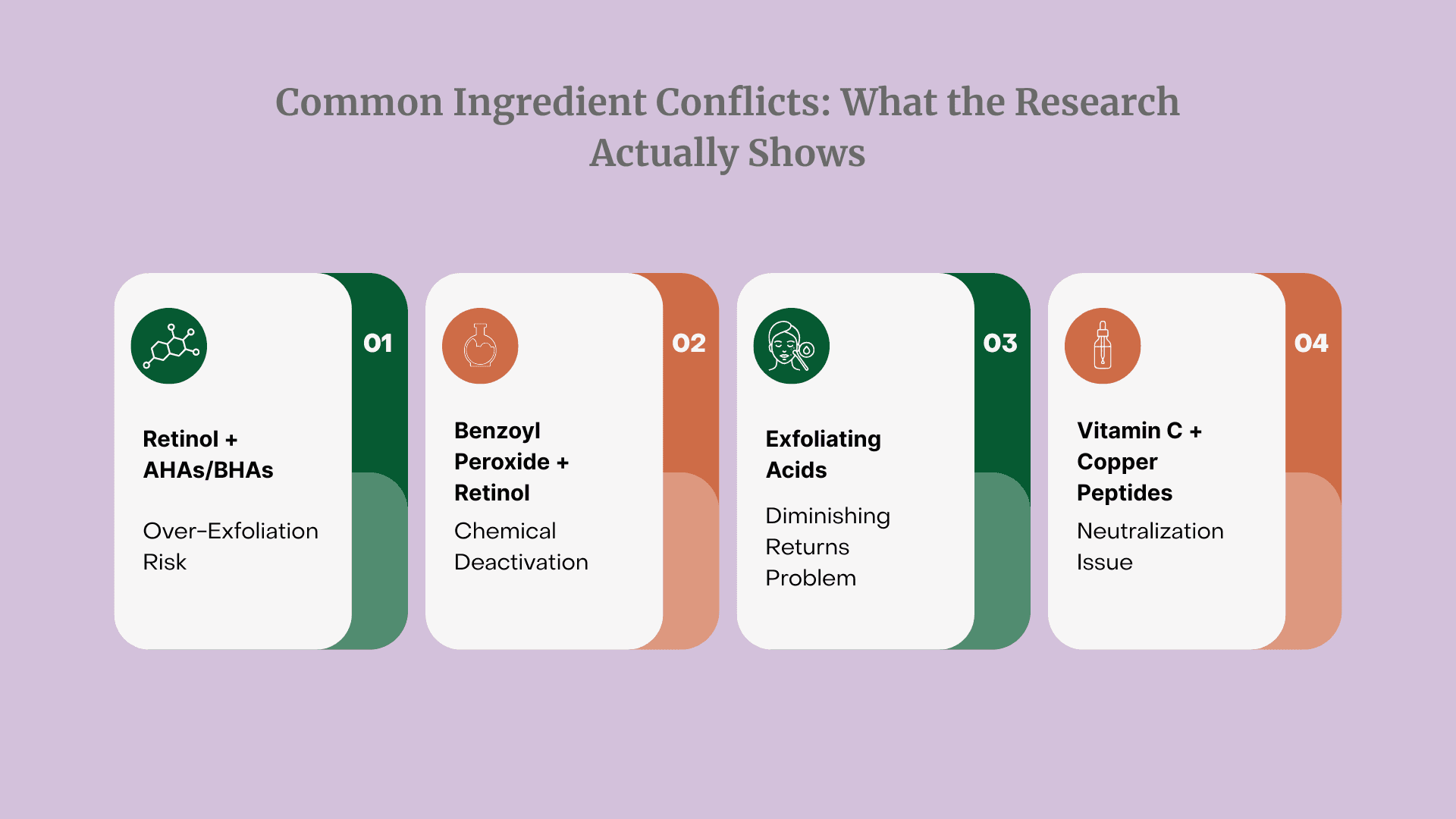
Retinol + AHAs/BHAs: The Over-Exfoliation Risk
The Concern: Combining retinol with exfoliating acids creates excessive irritation and barrier damage.
The Reality: This combination isn't inherently dangerous—it's about dosage, frequency, and skin tolerance.
What Happens When Combined:
Both increase cell turnover
Both can cause irritation and sensitivity
Both compromise barrier function temporarily
Together, they amplify these effects
Can You Use Them Together? ⚠️ YES, but carefully:
Beginners: Absolutely not. Build tolerance to each separately first (3-6 months minimum)
Experienced users: Possible with proper buffering and timing
Sensitive skin: Generally not recommended
Safe Combination Strategies:
Alternate nights: Retinol Monday/Wednesday/Friday, AHA/BHA Tuesday/Thursday
Different times: BHA in morning (under sunscreen), retinol at night (with A LOT of caution!)
Lower concentrations: Use gentler forms (retinaldehyde with lactic acid rather than tretinoin with glycolic acid)
Benzoyl Peroxide + Retinol: The Chemical Deactivation
The Problem: Benzoyl peroxide is a powerful oxidizer. Retinol is easily oxidized and becomes inactive.
Can You Use Them Together? ❌ NO—they chemically deactivate each other
When applied together, benzoyl peroxide literally destroys retinol molecules, rendering your expensive retinol serum completely useless.
Solution:
Use benzoyl peroxide in the morning
Use retinol at night
Or alternate nights entirely
Multiple Exfoliating Acids: The Diminishing Returns Problem
Common Mistake: Using a glycolic acid toner, followed by a lactic acid serum, then a salicylic acid spot treatment.
The Problem:
Over-exfoliation leads to barrier damage, not better results
You're stripping your skin faster than it can regenerate
Creates sensitivity, redness, and increased breakouts (the opposite of your goal)
Can You Layer Multiple Acids? ⚠️ Generally not recommended
Better Approach:
Choose ONE acid per routine
Use lower concentrations more consistently rather than high concentrations sporadically
Give your skin 48-72 hours between acid treatments
Vitamin C + Copper Peptides: The Neutralization Issue
The Problem: Vitamin C (especially ascorbic acid) and copper peptides work at different pH levels and can deactivate each other.
Can You Use Them Together? ⚠️ Best avoided in same routine
Solution:
Use vitamin C in morning (with sunscreen)
Use copper peptides at night
Or alternate days completely
Ingredient Combinations That Work Together
Whenever in doubt, defer to proven effective combinations. Here are a few most common ones. Save them in your notes and check back when shopping for a new product.
Power Couples: Synergistic Ingredients
Niacinamide + Hyaluronic Acid
Niacinamide strengthens barrier; hyaluronic acid hydrates
No pH conflicts
Reduces inflammation while increasing moisture retention
Safe for all skin types, including sensitive skin
Vitamin C + Vitamin E + Ferulic Acid
The "gold standard" antioxidant combination
Each ingredient stabilizes and enhances the others
Provides superior sun damage protection
Best used in morning under sunscreen
Retinol + Ceramides
Retinol increases cell turnover; ceramides repair barrier
Reduces irritation from retinol
Maximizes anti-aging benefits while minimizing side effects
Ideal for maintaining retinol tolerance
Niacinamide + Zinc
Common in acne-fighting formulations
Reduces sebum production and inflammation
Gentle enough for sensitive, acne-prone skin
Complementary mechanisms of action
Peptides + Hyaluronic Acid
Peptides signal collagen production; HA provides hydration
No conflicts in pH or chemical interaction
Provides anti-aging and plumping effects
Gentle and suitable for sensitive skin
The Complete Skincare Layering Guide: Order Matters
General Rules for Application Order
1. Thinnest to Thickest Consistency Water-based products penetrate better than oil-based ones. Apply in order:
Toner/Essence
Serums (water-based)
Serums (oil-based)
Moisturizer
Facial oil (if used)
Sunscreen (always last in AM routine)
2. pH-Dependent Actives First Products that require specific pH (vitamin C, exfoliating acids) should go on clean, dry skin immediately after cleansing.
3. Allow Absorption Time Wait 1-2 minutes between water-based products, 5-10 minutes after pH-dependent actives.
Morning Routine: Protection-Focused
Gentle Cleanser (if needed; many skip morning cleanse)
pH-Dependent Active (Vitamin C serum)
Wait 10 minutes for optimal absorption
Hydrating Toner/Essence
Niacinamide Serum (if not combined with vitamin C)
Eye Cream
Moisturizer
Sunscreen SPF 30+ (NEVER skip)
Evening Routine: Repair-Focused
Oil Cleanser/Balm (removes makeup, sunscreen)
Water-Based Cleanser (double cleanse)
Exfoliating Acid (2-3x per week)
Wait 20 minutes before next step
Hydrating Toner/Essence
Treatment Serums (niacinamide, peptides, hyaluronic acid)
Retinol (if using; start 2-3x per week)
Apply to completely dry skin
Eye Cream
Moisturizer
Facial Oil (optional, if very dry)
How to Audit YOUR Current Routine
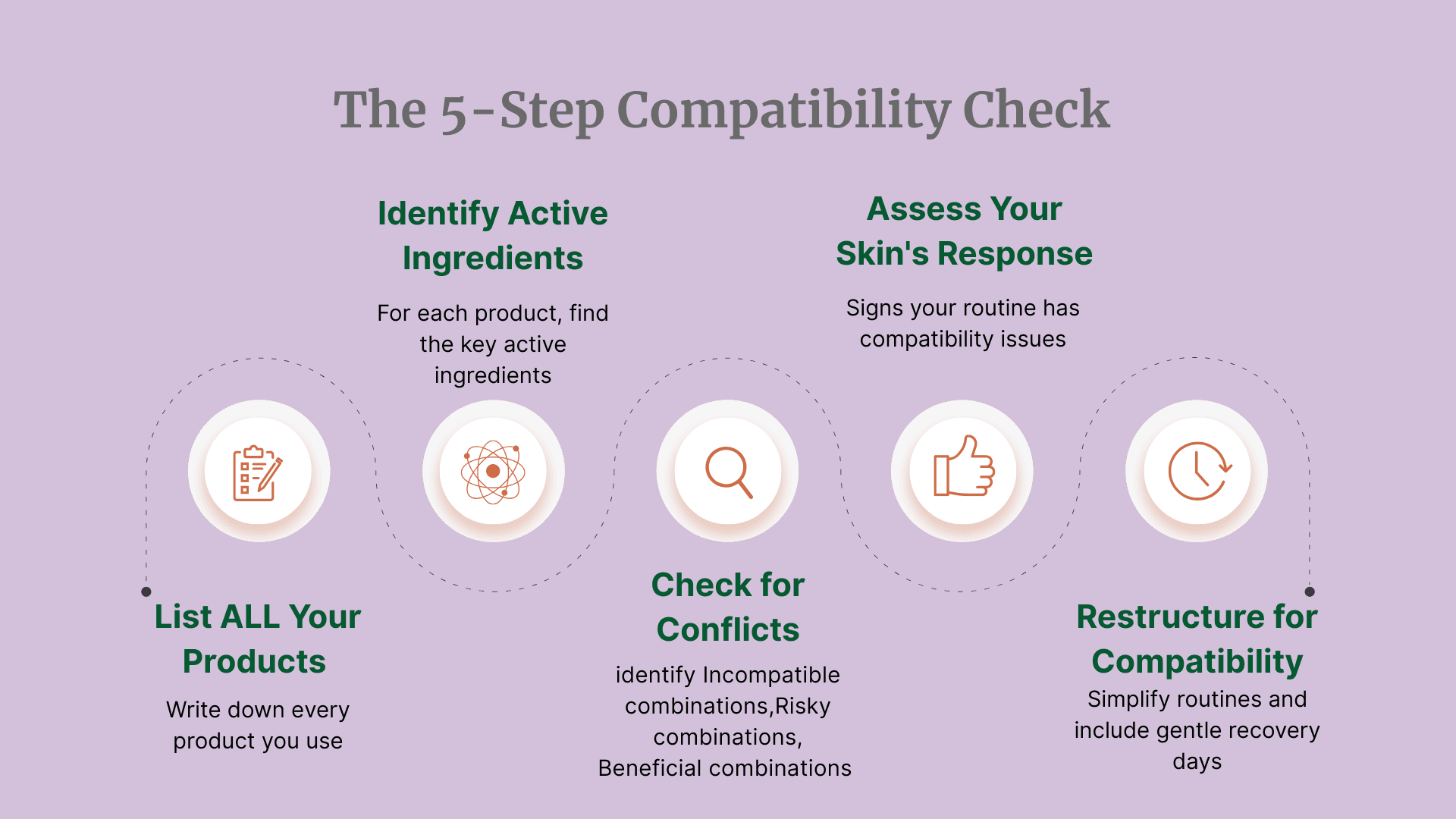
The 5-Step Compatibility Check
Step 1: List ALL Your Products Write down every product you use, including:
Cleansers
Toners
Serums
Treatments
Moisturizers
Oils
Sunscreen
Step 2: Identify Active Ingredients For each product, find the key active ingredients (usually the first 5-7 ingredients on the label). Look for:
Retinoids (retinol, retinaldehyde, adapalene, tretinoin)
Vitamin C (ascorbic acid, MAP, SAP)
Acids (glycolic, lactic, salicylic, mandelic)
Niacinamide
Peptides
Others (azelaic acid, tranexamic acid, etc.)
Step 3: Check for Conflicts Using the compatibility matrix above, identify:
❌ Incompatible combinations you're currently using together
⚠️ Risky combinations that need timing adjustments
✅ Beneficial combinations to leverage
Step 4: Assess Your Skin's Response Signs your routine has compatibility issues:
Persistent redness or irritation
Products "pilling" or balling up on skin
Breakouts that won't clear
Increased sensitivity over time
Products that "stopped working"
Dry patches or flaking despite moisturizing
Step 5: Restructure for Compatibility Based on your findings:
Separate incompatible ingredients (AM/PM or alternate days)
Add wait times between pH-dependent products
Reduce total number of actives used at once
Build in "recovery days" with gentle, hydrating products only
Key Takeaways: Your Ingredient Compatibility Checklist
✅ DO:
Start with one active at a time
Wait 3-6 months before adding new actives
Use pH-dependent products on clean, dry skin
Allow 20-30 minutes between incompatible pH products
Separate potentially irritating combinations (AM/PM)
Always use sunscreen during the day
Listen to your skin—irritation is a signal
❌ DON'T:
Mix benzoyl peroxide with retinol (same routine)
Layer multiple exfoliating acids
Use high-strength actives daily without building tolerance
Apply retinol to damp skin (increases irritation)
Skip sunscreen when using exfoliants or retinoids
Assume "more actives = better results"
Conclusion: Smart Layering for Results That Last
The difference between skin that tolerates active ingredients and skin that transforms with them comes down to compatibility. When you understand which ingredients work together—and which undermine each other—you stop wasting money on products that conflict and start seeing the dramatic improvements you were promised.
Your skincare routine should work with your skin's biology, not against it. By respecting pH requirements, avoiding chemical conflicts, and structuring your routine strategically, you'll achieve:
Better results from the products you already own
Fewer instances of irritation and sensitivity
Faster improvements in skin texture, tone, and clarity
Long-term skin health rather than short-term fixes
Remember: consistency with compatible ingredients beats aggressive treatment with incompatible ones, every single time.
Frequently Asked Questions
How long should I wait between applying different products?
For most products, 1-2 minutes is sufficient. For pH-dependent actives (vitamin C, acids), wait 10-20 minutes before applying the next product.
Can I use retinol and vitamin C in the same routine?
Yes, but timing matters. Best practice is vitamin C in the morning (under sunscreen) and retinol at night. If you want both at night, apply vitamin C first, wait 30 minutes, then apply retinol.
How do I know if my products are incompatible?
Signs include persistent irritation, products pilling on your skin, lack of results after 12 weeks, or worsening skin concerns despite consistent use.
Is it better to use fewer products with multiple actives or more single-ingredient products?
Generally, 3-4 well-formulated products with compatible actives work better than 8-10 single-ingredient products. You reduce layering issues and improve compliance.
Can I use AHA and BHA together?
Yes, many effective products combine them (like Paula's Choice or The Ordinary peeling solutions). However, start cautiously and ensure you've built tolerance to acids individually first.
References
Brooks SG, Mahmoud RH, Lin RR, Fluhr JW, Yosipovitch G. The Skin Acid Mantle: An Update on Skin pH. Journal of Investigative Dermatology. 2025 Mar;145(3):509-521.
Kumar P, Das A. Acid mantle: What we need to know. Indian Journal of Dermatology, Venereology and Leprology. 2023 Aug;89:729-32.
Cosmetic Ingredient Review Expert Panel. Final report of the safety assessment of niacinamide and niacin. International Journal of Toxicology. 2005;24(Suppl. 5):1–31.
Lin JY, Selim MA, Shea CR, et al. Ferulic Acid Stabilizes a Solution of Vitamins C and E and Doubles its Photoprotection of Skin. Journal of Investigative Dermatology. 2005 Oct;125(4):826-32.
Murray JC, Burch JA, Streilein RD, et al. A topical antioxidant solution containing vitamins C and E stabilized by ferulic acid provides protection for human skin against damage caused by ultraviolet irradiation. Journal of the American Academy of Dermatology. 2008 Sep;59(3):418-25.
Del Rosso JQ, Pillai R, Moore R. Absence of Degradation of Tretinoin When Benzoyl Peroxide is Combined with an Optimized Formulation of Tretinoin Gel (0.05%). Journal of Drugs in Dermatology. 2010 Oct;9(10):1191-6.
Draelos ZD, et al. Novel retinoid ester in combination with salicylic acid for the treatment of acne. Journal of Cosmetic Dermatology. 2016 Mar;15(1):36-42.
McDaniel D, et al. Efficacy and tolerability of a double-conjugated retinoid cream vs 1.0% retinol cream or 0.025% tretinoin cream in subjects with mild to severe photoaging. Journal of Cosmetic Dermatology. 2017 Sep;16(3):360-367.
American Academy of Dermatology. Guidelines of care for the management of acne vulgaris. Journal of the American Academy of Dermatology. 2016;74(5):945-73.
Baumann L. Cosmetic Dermatology: Principles and Practice, 3rd Edition. Chapters 24, 27, 82. McGraw-Hill Education, 2022.
This article is based on peer-reviewed dermatological research and clinical studies. Individual results may vary. Consult a dermatologist for personalized skincare advice, especially if you have specific skin conditions or concerns.